The short answer
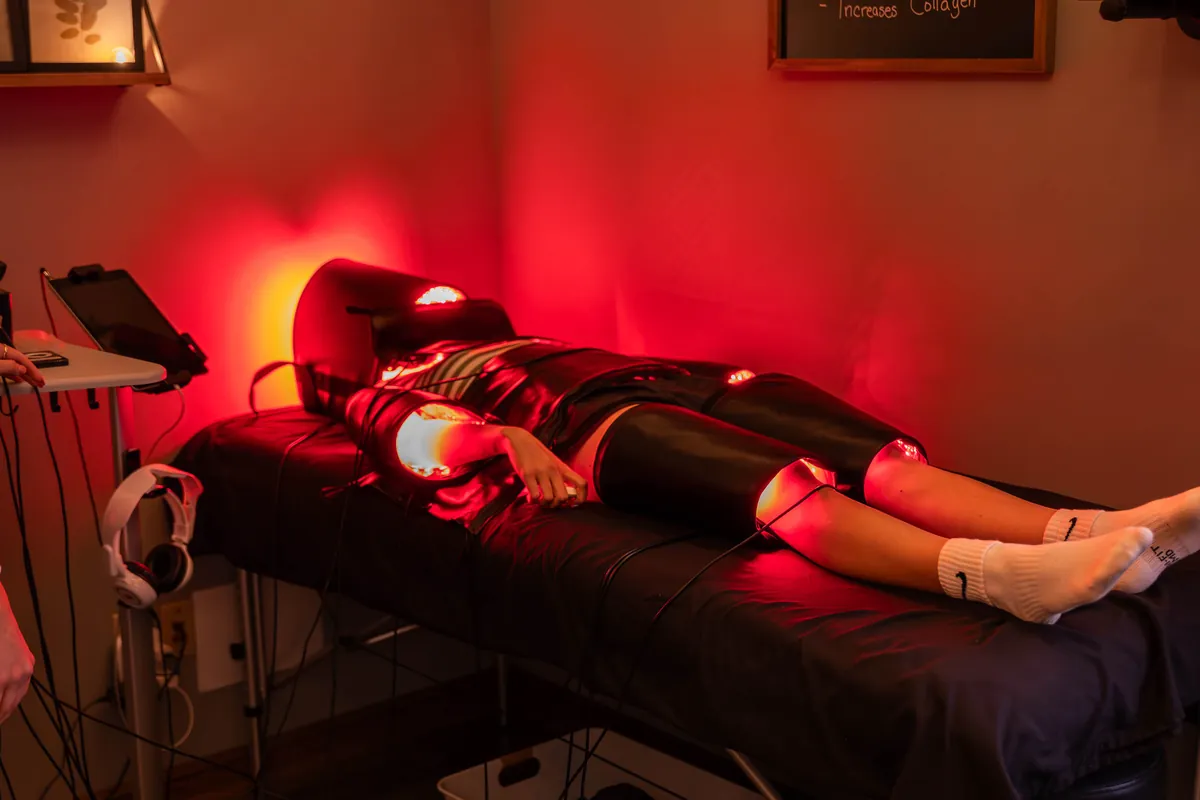
Red light therapy uses red and near-infrared light, delivered from a panel held close to the skin, to support the body's own recovery in a sore or irritated area. It is drug-free, non-invasive and painless, and here it is often part of a wider plan, including our weight loss programs.
Red light therapy is marketed for almost everything at the moment, which makes it hard to know what is real. Here is the grounded version: what it actually is, how a session feels, where we find it useful, and an honest word on where the evidence is strong and where it is not.
What is red light therapy?
It is a panel of LEDs that delivers red and near-infrared wavelengths into the tissue, a process usually called photobiomodulation. The light is absorbed by the cells in the area, where it is thought to support their normal energy production and ease local irritation. You feel a mild warmth and nothing sharp, there are no needles and no medication, and nothing is applied to the skin.
It is the same underlying idea as therapeutic laser, delivered differently. A laser concentrates one wavelength into a small handpiece for a focused spot; a red light panel spreads a broader band of light across a wider area at lower intensity. We use whichever suits the area we are working on.
Who is it for?
We tend to reach for it when an area is irritated or slow to settle and someone wants a gentle, drug-free option to support the rest of their care.
- A localised ache or strain that is taking its time to calm down.
- Soft-tissue irritation around a joint we are already working on.
- Recovery support for active people between harder efforts.
- Skin that is healing after an injury or a procedure, where the goal is to support normal repair.
- People who would rather try something non-invasive before anything stronger.
It is not right for every situation, and there are areas and conditions where we would not use it. A short check before we begin settles whether it is a sensible fit for you.
Is red light therapy proven to work?
Partly, and it depends entirely on what you are asking it to do. For localised soft-tissue irritation, recovery support and some kinds of skin healing, the research is genuinely encouraging even if it is still developing. For the bigger claims you will see online, energy, mood, sleep, weight and the appearance of ageing, the evidence is thin or absent, and we do not offer it for those. We would rather tell you that plainly than sell you a course of sessions on a promise nobody can keep.
What does a session involve?
You sit or lie comfortably with the panel positioned near the area, usually for several minutes at a time. Most people feel a mild warmth and nothing more, and there is no downtime afterwards, so you carry on with your day. We normally pair it with the hands-on care and movement that address why the area got overloaded in the first place.
What does it cost, and do you take insurance?
Coverage for red light therapy varies by plan and is often not covered at all. We give you clear numbers before anything begins.
- No referral needed to book a first visit.
- We go over the costs with you before anything begins, so you know what to expect.
- Clear, up-front pricing if you are paying out of pocket.
We cannot promise a specific outcome or what your insurance will cover, and red light therapy is offered as one part of a wider plan rather than as a cure.